


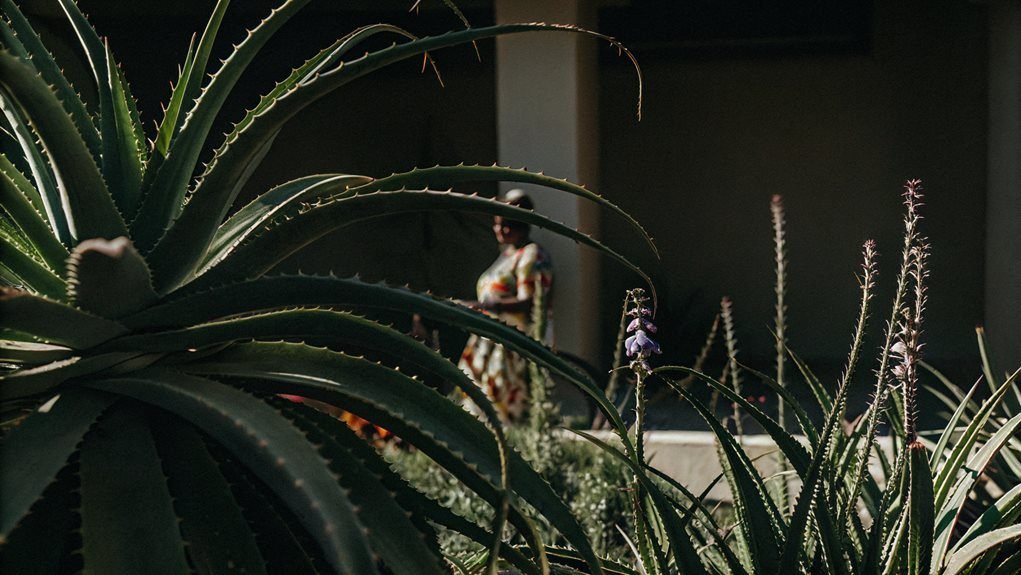
South Africa has one of the richest medicinal floras in the world, and plants have been used for healing here for centuries. Margaret Roberts spent decades growing, studying and writing about them, and many still grow in the indigenous medicinal garden at the Herbal Centre in De Wildt.
Below are 12 of the best-known South African medicinal plants, how they have traditionally been used, and how to grow them. For more than 140 plants in depth, see Margaret and Sandy Roberts’ book Indigenous Healing Plants on our books page.
This article describes traditional uses and is for general information only. It is not medical advice. Speak to your doctor or pharmacist before using any plant remedy, especially if you are pregnant, breastfeeding, taking medication or treating a child.
12 South African medicinal plants and their traditional uses
1. Wilde als (Artemisia afra)
Also called African wormwood, umhlonyane and lengana, wilde als is one of the most popular medicinal plants in South Africa. The bitter, aromatic leaves have traditionally been taken as a tea, syrup or steam for coughs, colds, flu, fever and poor appetite. SANBI’s PlantZAfrica profile of Artemisia afra describes it as a soft, silver-grey shrub that is easy to grow in a herb garden.
2. Cancer bush (Lessertia frutescens, formerly Sutherlandia)
Kankerbos is a silver-leaved shrub with red, balloon-like pods. It has a long history of use as a general tonic and for stress, poor appetite and digestive complaints, and it is now sold widely as a supplement. Check with your doctor first if you take chronic medication.
3. Umckaloabo (Pelargonium sidoides)
This small pelargonium with dark maroon flowers grows in the grasslands of the Eastern Cape, Free State and Lesotho. Its roots have traditionally been used for coughs and chest complaints, and extracts are used in commercial cough remedies.
4. Bitter aloe (Aloe ferox)
The clear gel inside the leaves has been used on burns, cuts and irritated skin, while the bitter yellow sap is a strong traditional laxative that should be used with great care. Bitter aloe is a striking, water-wise plant for a sunny rockery.
5. Buchu (Agathosma betulina)
One of the Cape’s most famous herbs, buchu has aromatic, oil-rich leaves. It has traditionally been used for urinary and stomach complaints, often steeped as a tea or in brandy.
6. Bulbinella or burn jelly plant (Bulbine frutescens)
Margaret Roberts called bulbinella a first-aid kit in a pot. Break a fleshy leaf and the clear jelly can be dabbed onto minor burns, grazes, rashes and insect bites. It forms tough, flowering clumps in full sun.
7. Wild dagga (Leonotis leonurus)
Wild dagga’s orange, tubular flowers bring sunbirds to the garden. The leaves have traditionally been used as a tea for coughs, colds and fevers.
8. African ginger (Siphonochilus aethiopicus)
African ginger’s aromatic roots have been chewed for colds, flu, coughs and asthma. It has been so heavily harvested from the wild that you should only ever buy cultivated plants.
9. African potato (Hypoxis hemerocallidea)
Despite its name, this is a yellow-flowered grassland plant with a large corm, not a potato. The corm has traditionally been used as a tonic and is sold as a supplement, although the scientific evidence is still limited.
10. Wild garlic (Tulbaghia violacea)
Wild garlic is a tough, mauve-flowered garden plant whose leaves and flowers are edible and taste of mild garlic. It has traditionally been used for coughs and colds, and it is planted around homes to discourage snakes, moles and insects. See how to use it in our guide to natural insect repellent herbs.
11. Rooibos (Aspalathus linearis)
From the Cederberg, rooibos is now drunk all over the world as a caffeine-free tea. It is one of South Africa’s great plant gifts to everyday wellness.
12. Devil’s claw (Harpagophytum procumbens)
Named for its hooked seed pods, devil’s claw grows in the Kalahari. Its tuberous roots have traditionally been used for joint pain and rheumatism and are widely sold as a supplement.
Traditional remedies for the skin
Many of the most useful garden remedies are for small cuts, grazes and burns. Besides bulbinella and bitter aloe, two non-indigenous herbs grow well in South African gardens and have a long history of use on the skin: yarrow for cuts and grazes and calendula, which you can turn into a simple homemade ointment.
How to grow a small medicinal garden
- Choose a sunny spot: most of these plants need at least six hours of sun.
- Give them drainage: buchu, wilde als, aloes and cancer bush dislike wet roots. In heavy soil, use raised beds.
- Water wisely: once established, most are water-wise and need little extra water.
- Buy cultivated plants: never dig plants from the wild. Our herb nursery grows many medicinal plants from mother stock.
The Margaret Roberts seedbank legacy also preserves 1,500 seeds of South Africa’s indigenous food and medicinal plants. You can see many of these plants growing on our open days, every Wednesday and on the first Saturday of the month.
Frequently asked questions
What is the most popular medicinal plant in South Africa?
Wilde als (Artemisia afra) is one of the most widely used. It has long been taken as a tea or steam for coughs, colds and flu across southern Africa.
Can I grow South African medicinal plants at home?
Yes. Most of the plants in this guide, including wilde als, bulbinella, wild garlic, wild dagga and cancer bush, are easy to grow in a sunny garden with good drainage.
Are traditional medicinal plants safe to use?
Many have a long history of use, but plants can cause side effects and can interact with medication. Speak to a doctor or pharmacist before using them.